Certified ESD floors that pass on handover — not just look the part.
Conductive and static-dissipative epoxy systems for data centres, electronics, cleanrooms and defence. Designed to a measured target, properly grounded, and resistance-tested with documented proof. Operating since 2013.
Est. 2013
12+ years in resinous flooring
Compliant
IEC 61340-5-1 · ANSI/ESD S20.20
Verified on handover
Resistance test + certificate
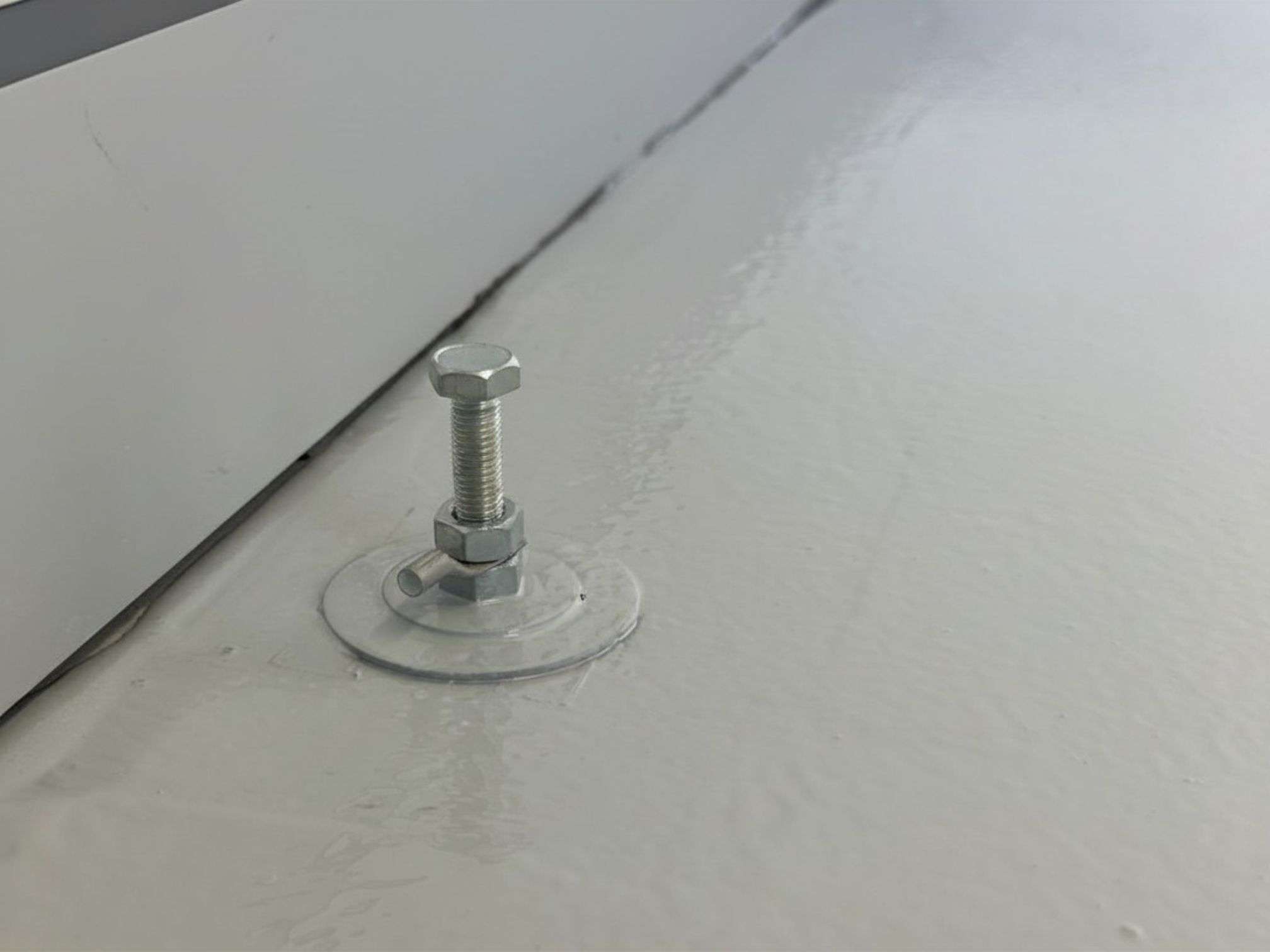
Most ESD floor failures aren’t the coating — they’re the spec.
A floor that looks right but tests outside range puts your equipment, compliance and insurance at risk. Atlas designs each system to a measured resistance target, installs a proper earthing network, and tests the finished floor so you have documented proof it performs.
Conductive
≤ 1.0 × 10⁶ Ω · munitions, hazardous areas
Static-dissipative
106–109 Ω · data centres, electronics
| System | Resistance to ground | Typical application |
|---|---|---|
| Conductive | ≤ 1.0 × 10⁶ ohms | Munitions, explosive atmospheres, high-sensitivity electronics |
| Static-dissipative | 1.0 × 10⁶ – 1.0 × 10⁹ ohms | Data centres, electronics assembly, labs, cleanrooms |
Both ANSI/ESD S20.20 and IEC 61340-5-1 cap resistance-to-ground below 1.0 × 10⁹ ohms and require personnel body voltage under 100 V. We design to the right range for your program — not a generic default.
Built for static-sensitive environments
The same floor isn’t right for every room. We match the system to your standard and your traffic.
Data Centres & Server Rooms
Seamless, dust-free dissipative systems for high-density, mission-critical rooms and heavy rack & trolley loads.
Electronics & EMS
Assembly, SMT and test areas kept inside ESD-Protected-Area spec, line-wide.
Pharma & Cleanroom
Low-VOC, seamless, easy-sanitise systems with coving for hygiene-critical spaces.
Defence & Hazardous
Conductive systems for explosive-atmosphere and ordnance handling.
Battery, EV & Energy
Static control for cell handling, BESS and EV production where ignition risk is real.
Telecom & Switch Rooms
Comms rooms, AGV floors and control centres needing reliable dissipation.
Finished ESD and anti-static flooring projects
View examples of static-control epoxy flooring, conductive earth points, warehouse finishes and antistatic systems installed for sensitive environments.
Why facility owners choose Atlas
Because an ESD floor is not just a coating — it is part of your compliance, safety and operational risk control.
Passes on handover
We test the finished floor and provide documented results, so your site has proof of compliance from day one.
Protects sensitive equipment
Static-control flooring helps reduce electrostatic discharge risks around electronics, batteries, server rooms and production equipment.
Proper grounding system
Copper earthing points are installed and connected to the building earth for reliable resistance performance.
Prepared to last
Diamond grinding creates a CSP3 concrete profile for strong adhesion, helping prevent peeling and delamination.
Safe for daily operations
Anti-slip finishes can be adjusted to suit foot traffic, trolleys, equipment movement and wet-area risks.
Minimal disruption
We can stage works, work after hours, and plan around operational downtime where required.
Our installation process
Five controlled stages, every job.
Floor prep
Diamond grind to a CSP3 profile for an optimal bond.
Primer & earthing
Epoxy primer + copper earthing points to building earth.
Conductive layer
Conductive primer establishes the grounding network.
ESD coat
Self-smoothing ESD epoxy + topcoat; anti-slip where specified.
Verification
Resistance testing against target; results documented.
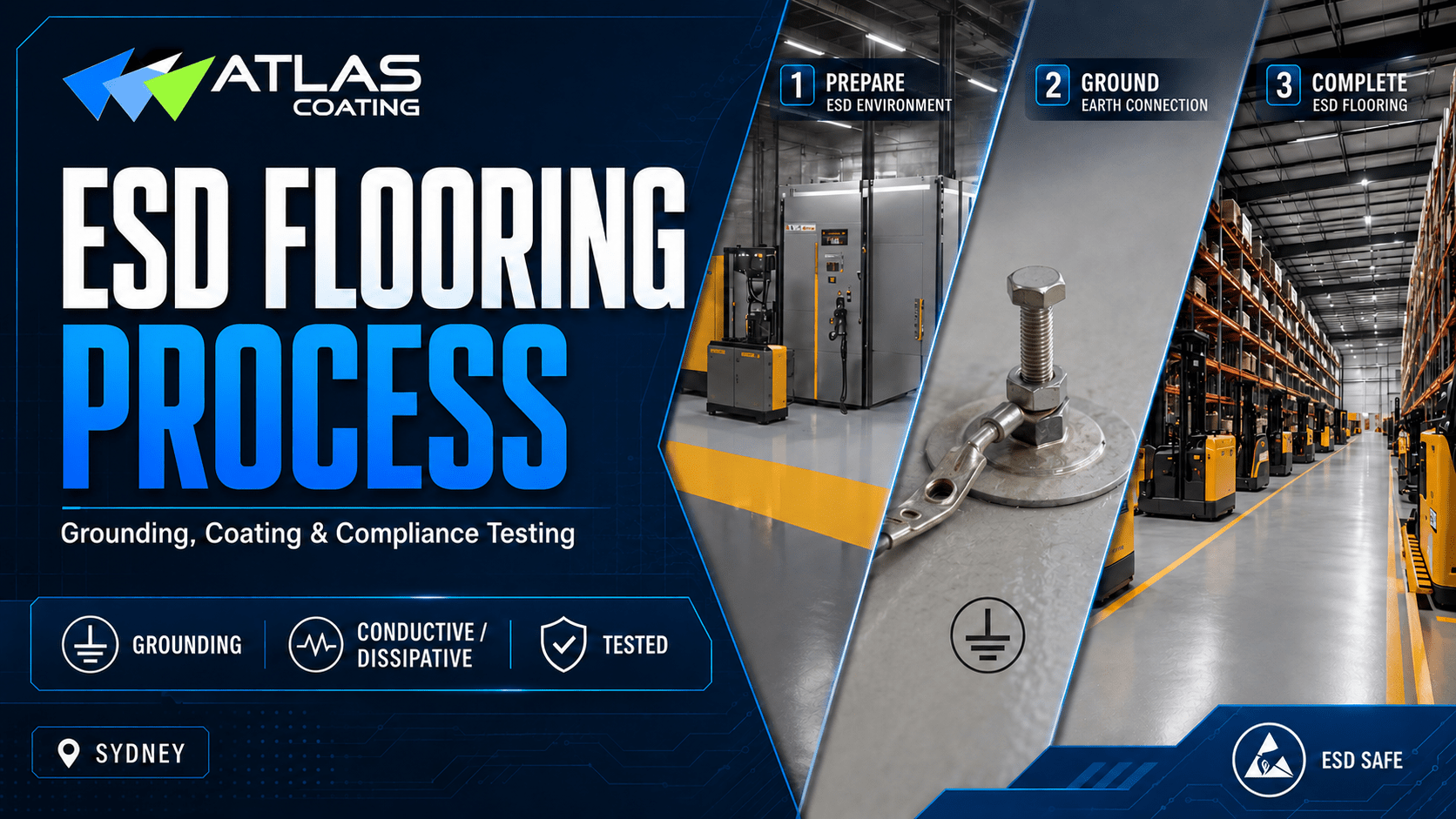
Watch the full ESD flooring process
See how Atlas Coating prepares the concrete, installs the earthing system, applies the ESD coating and verifies the floor against the required resistance target.
Watch Video →Specifying or maintaining a static-sensitive facility?
We’ll measure your slab, recommend the right system for your standard, and document it.
ESD flooring questions answered
Clear answers for facility owners, operators, builders and specifiers planning an anti-static, conductive or static-dissipative epoxy floor.
ESD flooring is a static-control floor system designed to help manage electrostatic discharge. It is commonly used in electronics, data rooms, battery areas, cleanrooms, laboratories, defence facilities and other static-sensitive environments.
Anti-static generally refers to reducing static build-up. Conductive flooring allows charge to move more quickly to ground. Static-dissipative flooring controls charge at a slower, measured rate. The correct system depends on your equipment, risk level and required resistance range.
Yes. A proper ESD floor normally requires copper earthing points connected to the building earth. Without correct grounding, the floor may look finished but may not perform within the required resistance range.
Yes. We can resistance-test the finished floor and provide documented results for handover, quality assurance and internal compliance records.
ESD flooring is commonly specified for electronics manufacturing, server rooms, battery charging areas, EV infrastructure, laboratories, cleanrooms, medical production, defence facilities, switch rooms and warehouses with static-sensitive equipment.
Yes. The anti-slip profile can be adjusted depending on foot traffic, trolley movement, wet-area risk and cleaning requirements. The finish must be selected carefully so slip resistance does not compromise the required ESD performance.
Timing depends on the area size, slab condition, moisture, repair work and system build-up. Smaller areas may be completed over a few days, while larger commercial sites may require staged installation to reduce operational disruption.
Yes. For live facilities, we can plan staged works, weekend work or after-hours installation where practical. This helps reduce downtime for production, logistics, data rooms and operational areas.
Yes, when the correct system is selected. Warehouses, battery rooms and industrial facilities may need a heavier-duty ESD epoxy system designed for forklifts, pallet jacks, trolleys, equipment loads and frequent cleaning.
The right system depends on your standard, required resistance range, traffic, cleaning method, substrate condition and operating environment. Atlas Coating can assess the slab and recommend a conductive or static-dissipative system to suit the site.
Need advice on the right epoxy flooring system?
Send us your project details, photos and approximate floor size. Atlas Coating will recommend the most suitable system for your site conditions.